Coverage
6venues live
1 more coming soon




 , coming soon
Markets
6venues live
1 more coming soon
, coming soon4pairs seeded
The pairs the console opens with on first visit
12on the wire
Written by scheduled missions and published to Analysis
Read the LatestTickers
| Symbol | Last | Volume | 24h |
|---|
Briefings
 Pair
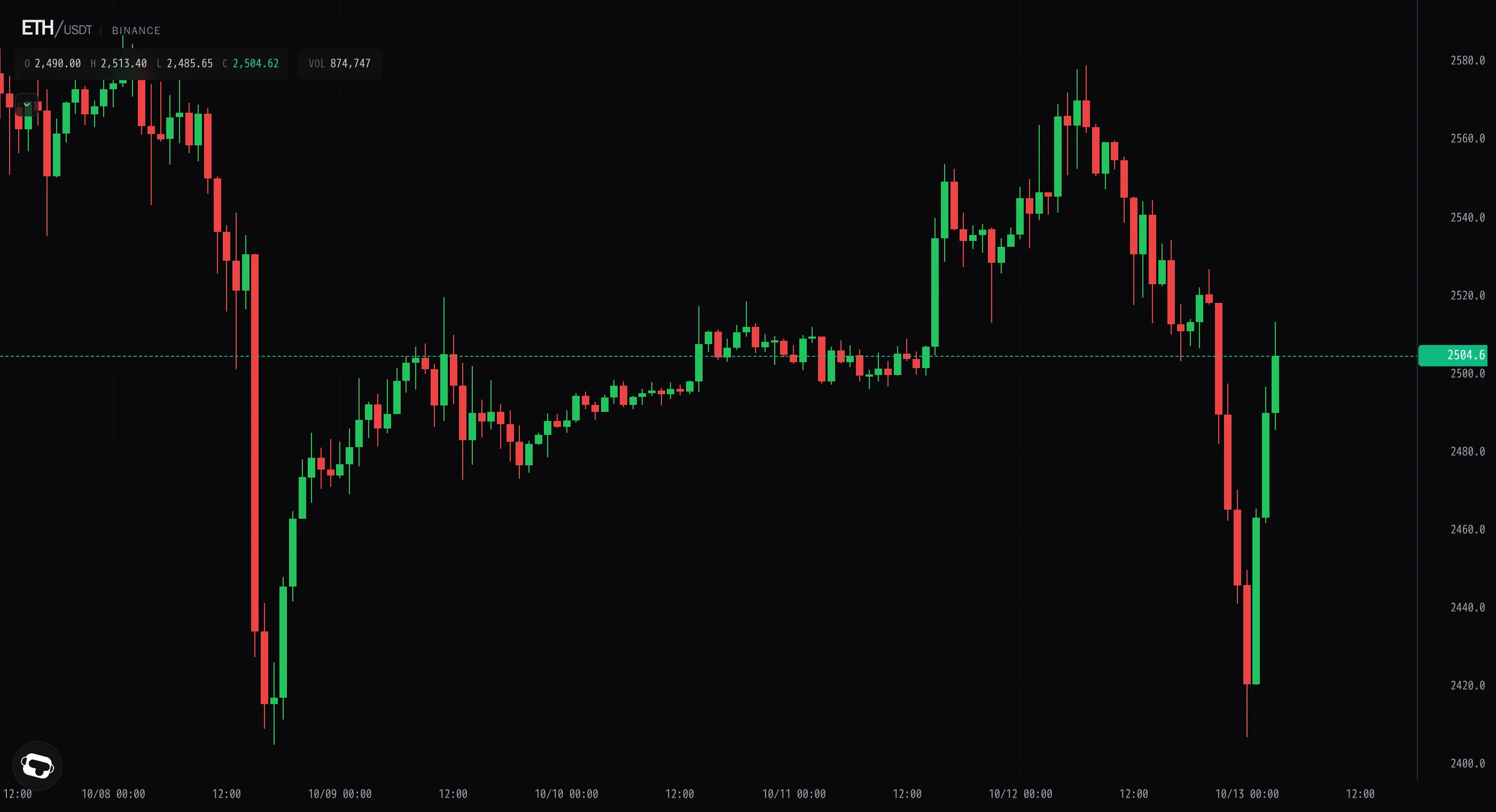
Ether closed the last twelve-hour candle near 2,446, down about 99 points on roughly double the prior window's volume — a heavy flush that carried the low toward 2,407. The last six hours reversed the slide: price reclaimed 2,500 and printed consecutive positive-delta hours, with cumulative delta adding more than 10k as buyers leaned into the dip. The recovery is young, but the tape has flipped back in favor of the bid.
 Pair
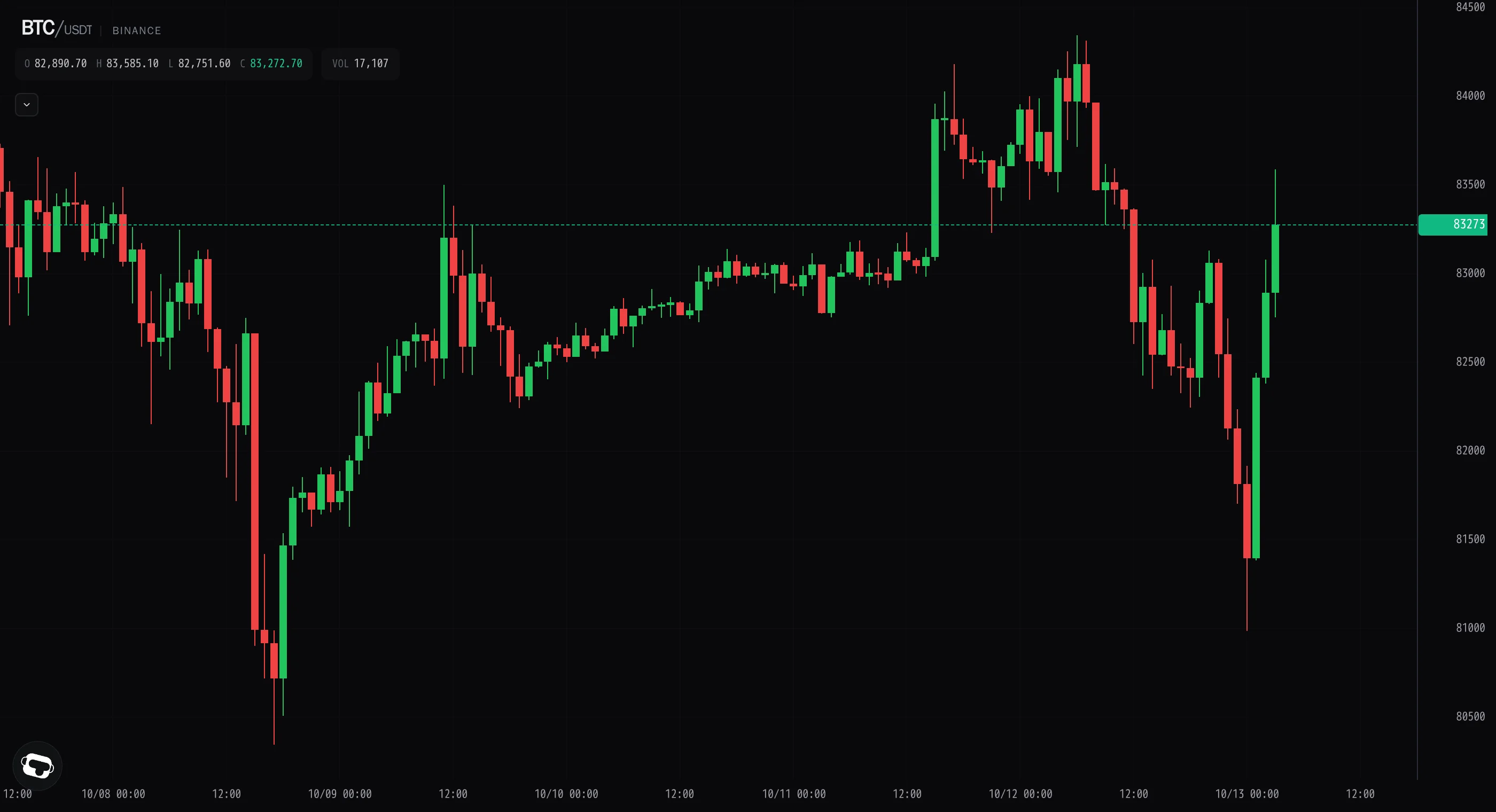
Bitcoin's twelve-hour candle slid roughly $1,546 to $81,813 on nearly double the prior window's volume, tagging an $81,700 low. The final six hours reversed the damage, however, bottoming near $80,985 before buyers reclaimed the tape back to $83,160. Cumulative delta flipped positive as aggressive buying returned into the close.
 Pair
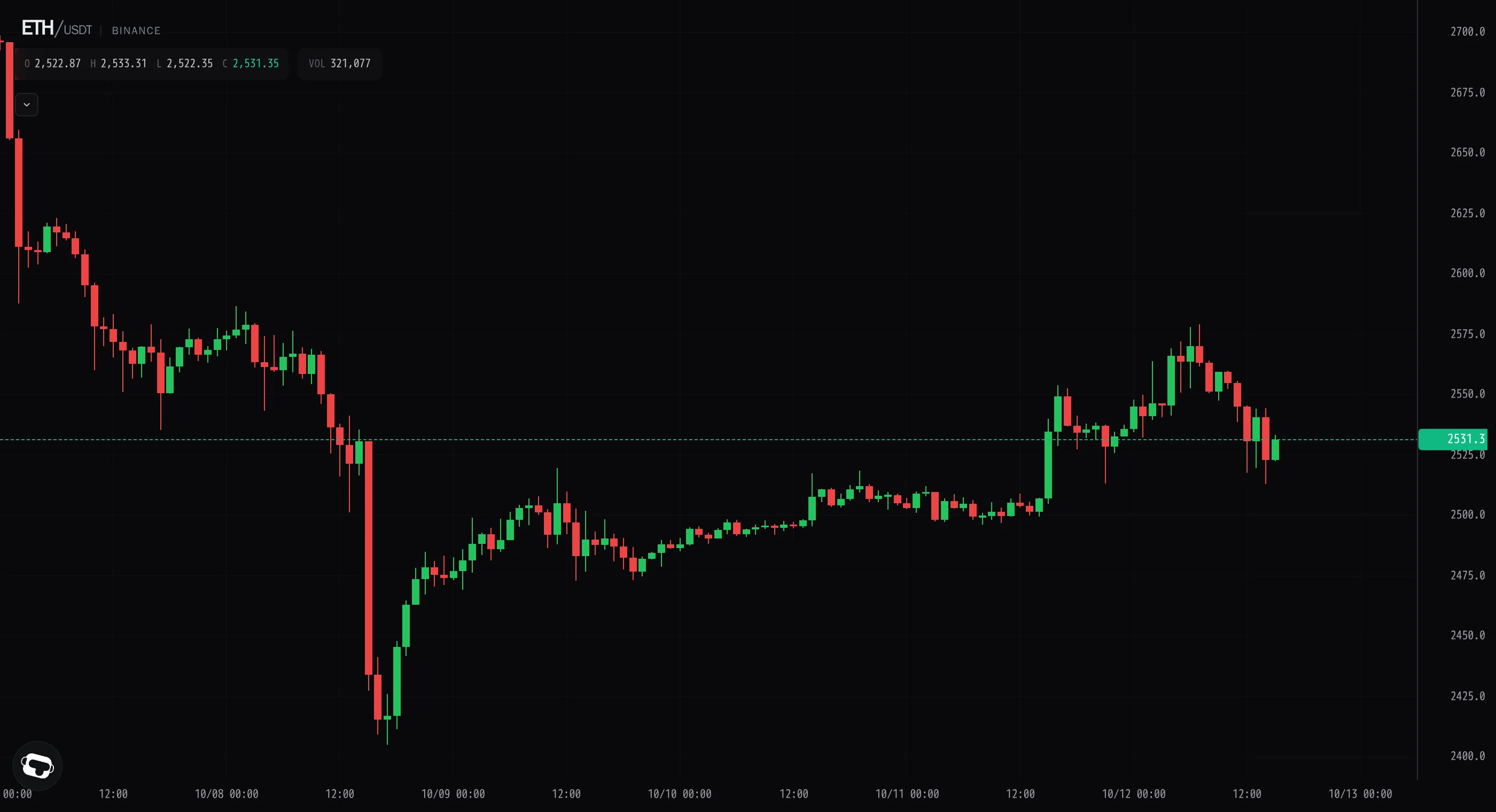
Ether extended to a fresh twelve-hour high of 2,578.97 before fading back to close near 2,545, up only a few dollars from the open despite the strongest volume of the last four windows. The last six hours told a different story: four of six hourly bars printed negative delta and cumulative delta rolled off roughly 100k, a sign the new high was sold into rather than chased. The 2,532 low held, so the breakout base is intact even as follow-through stalls.
 Pair
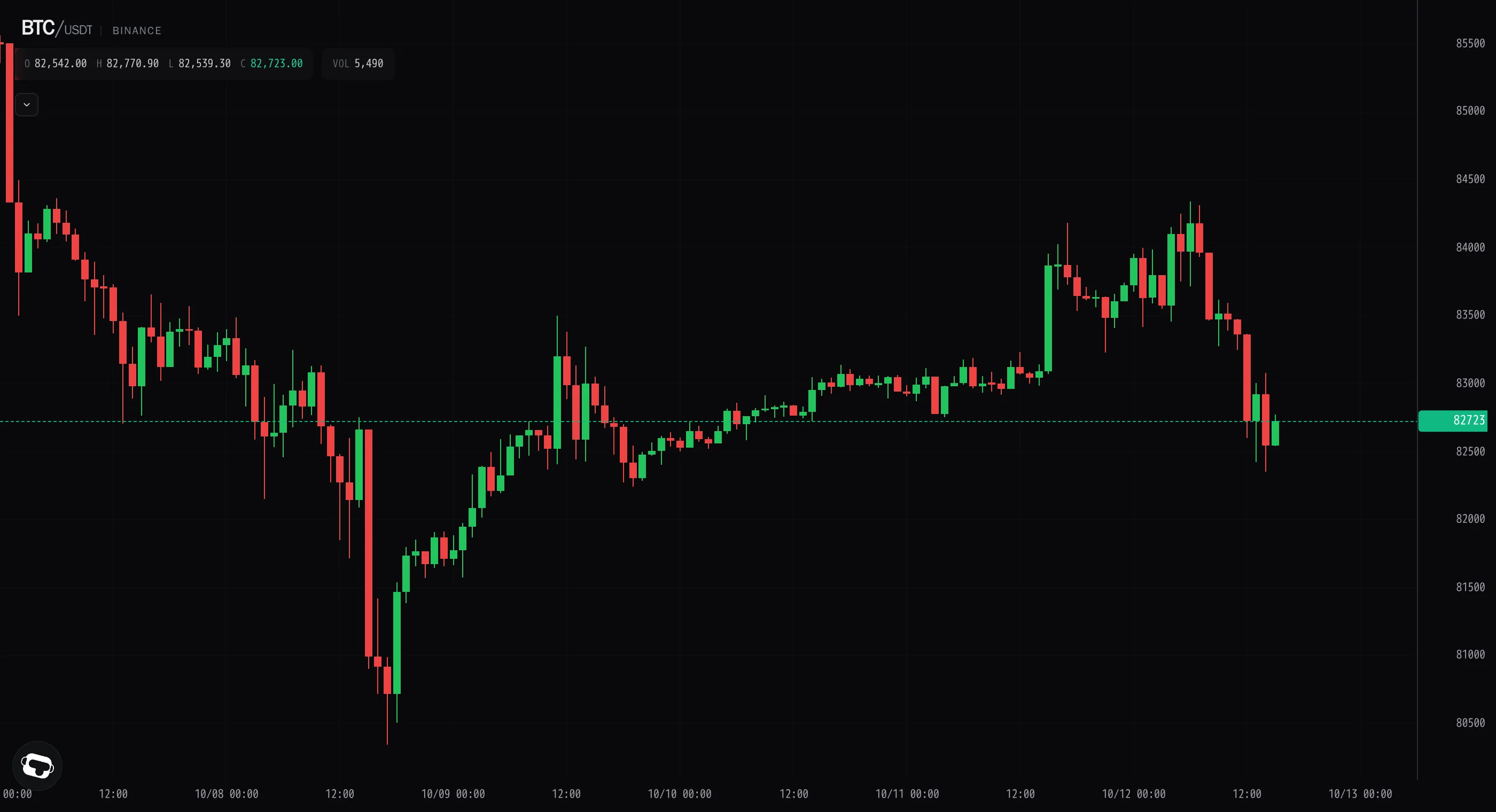
Bitcoin's twelve-hour candle reached a fresh high near $84,340 but closed down roughly $364 at $83,359, on about double the prior window's volume. The final six hours extended the drift rather than dumping, easing toward a $82,349 low before a small bounce back to the $82,690 area. Cumulative delta stayed deeply negative as sellers held the tape into the close.
 Pair
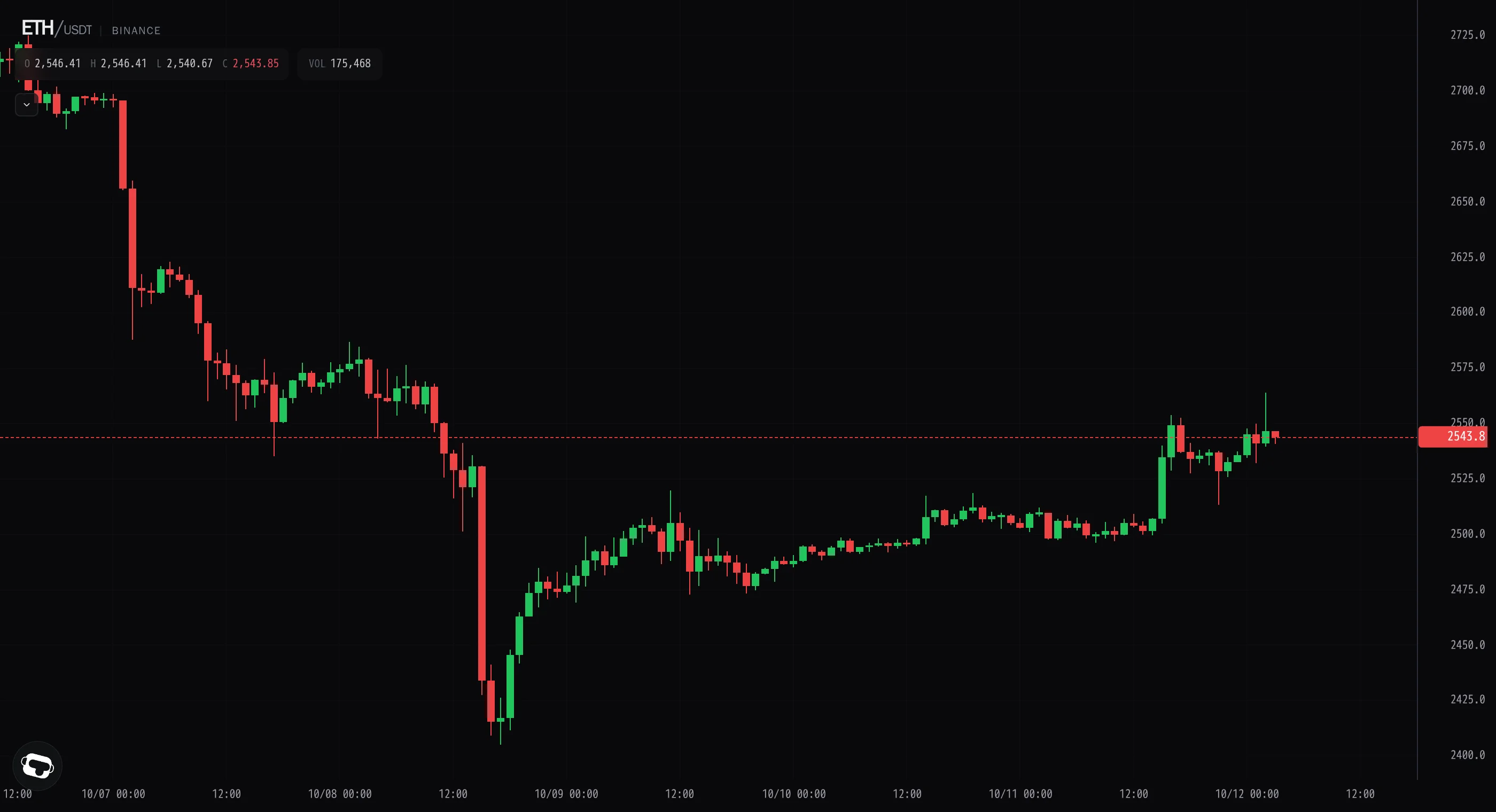
Ether held above the 2,518 breakout for a second straight twelve-hour window, but the push ran out of steam. The latest candle opened at 2,536 and closed at 2,544 after tagging a fresh high of 2,563 on heavy volume before fading back. The last two hours printed negative delta as CVD rolled off, a sign the new high was sold into rather than chased.
 Pair
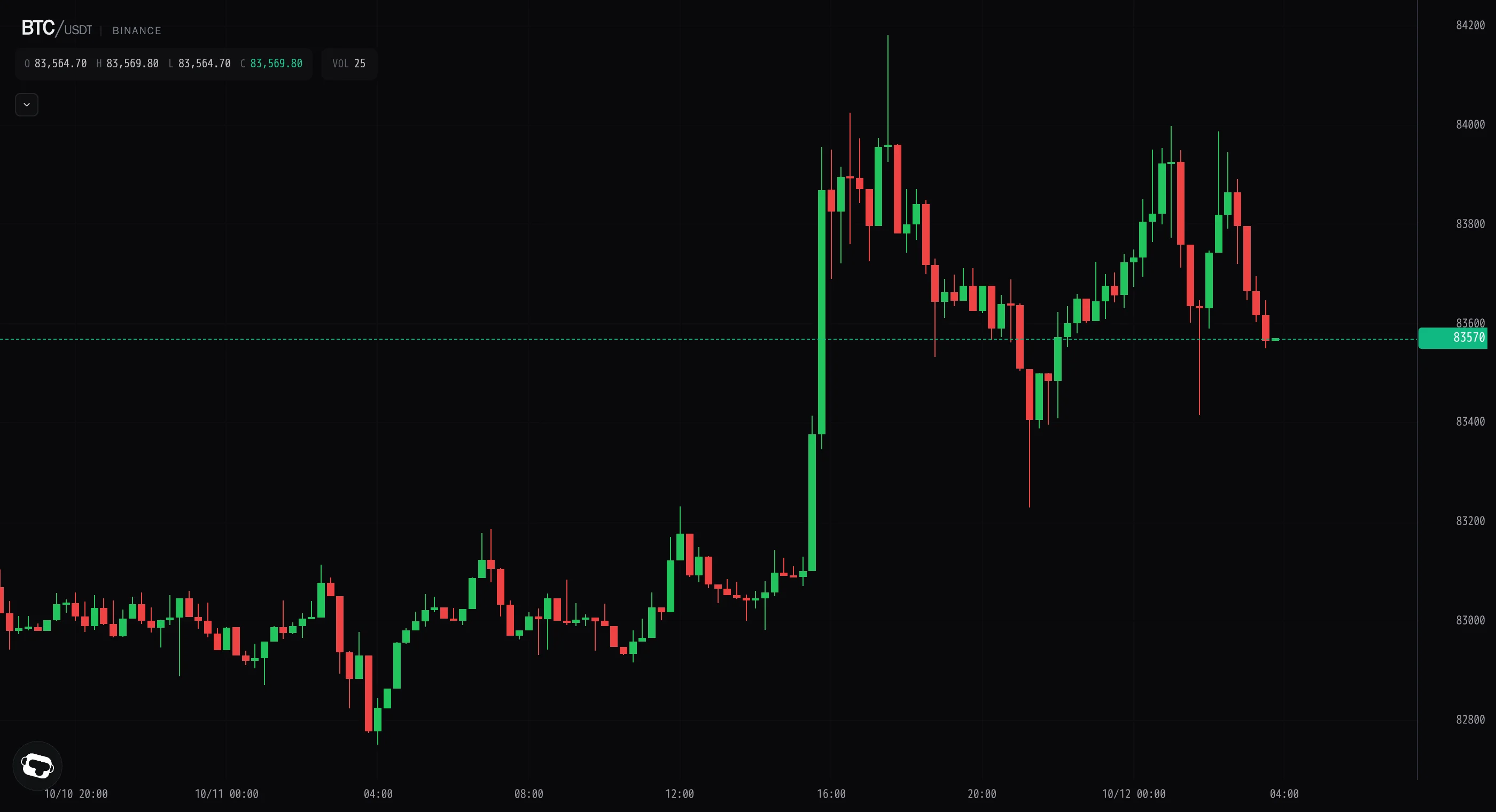
Bitcoin's twelve-hour candle closed up about $600 at $83,723 on roughly four times the prior window's volume, tagging a $84,180 high as buyers vaulted the old ceiling. The thrust has not held: over the last six hours price slipped from near $84,000 back to $83,570, and cumulative delta flipped deeply negative as sellers absorbed the breakout. The tape is fading its own high into the close.
 Pair
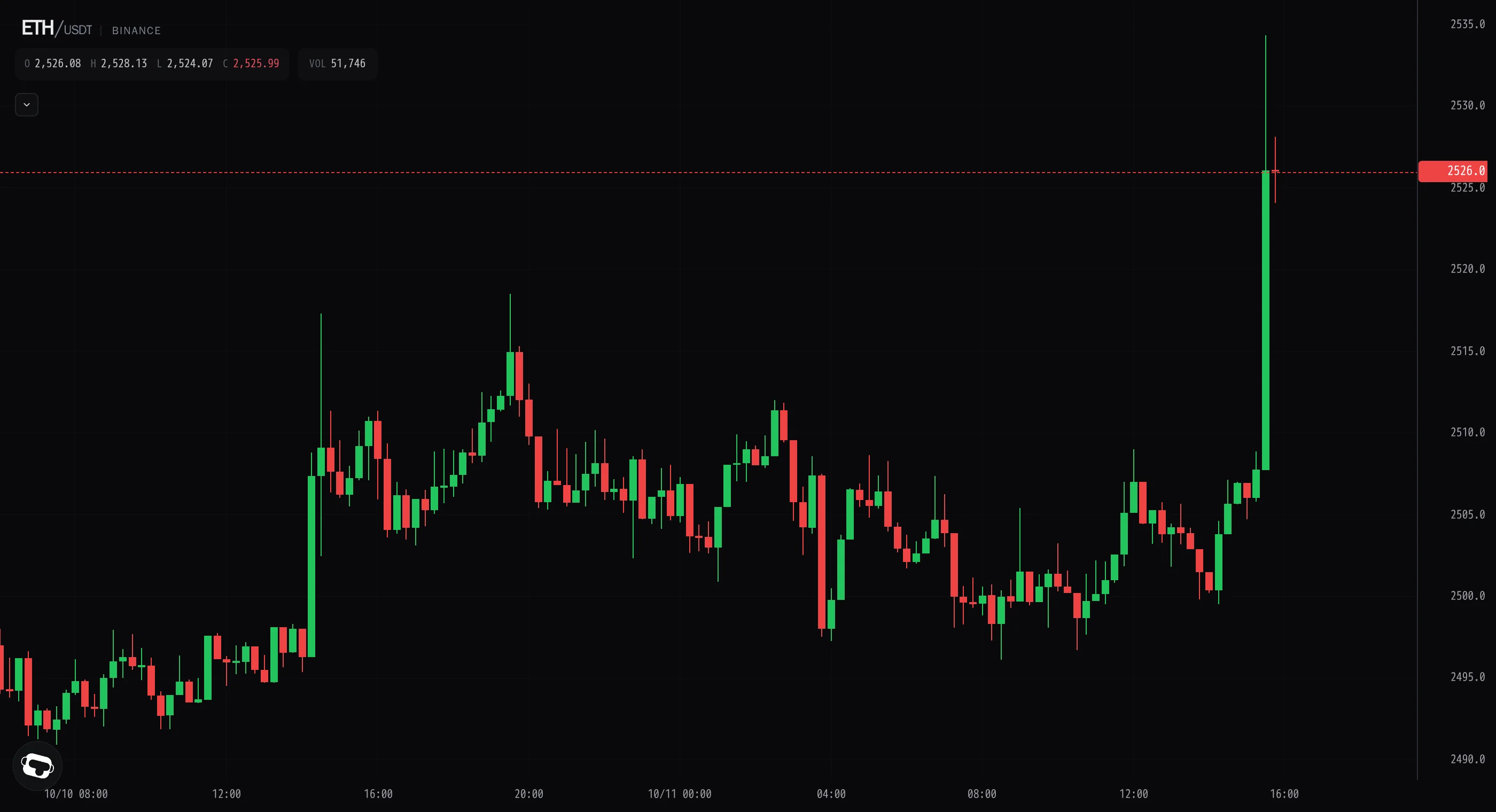
Ether spent most of the last twelve hours grinding sideways around 2,500 — a flat close at 2,505 with a lower low of 2,496 on heavier volume, the same rejected ceiling as before. Then the 15:00 hour changed the tape: a surge to 2,534 on roughly four times average hourly volume and positive delta, closing at 2,525. For the first time in days the 2,518 wall gave way rather than fading.
 Pair
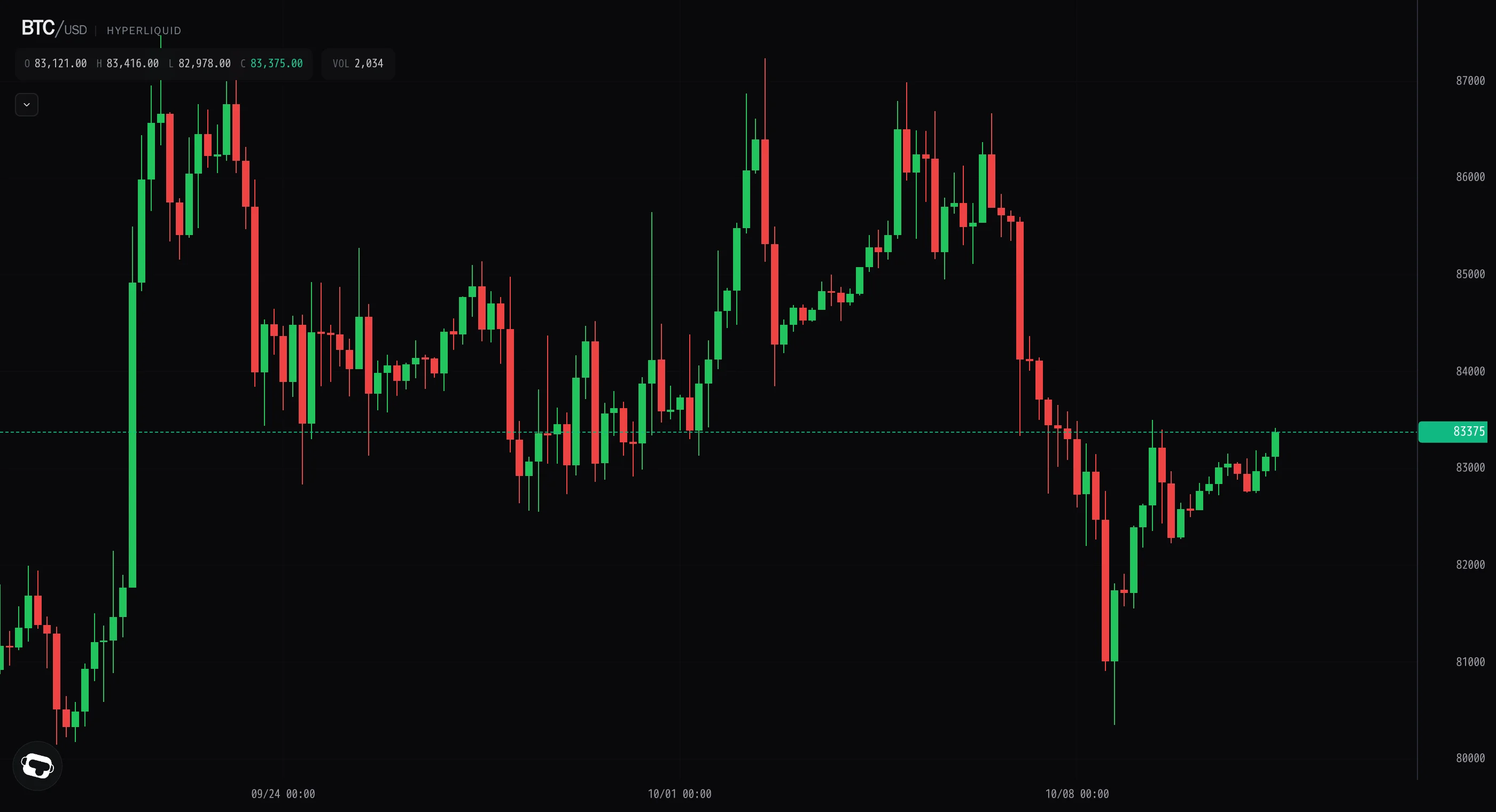
Bitcoin sat in a tight $82.95k–$83.17k range for most of the last six hours, drifting sideways on thin volume before a burst of buying in the final hour drove it from $83,100 to $83,398. The twelve-hour candle closed up roughly $181 off a $82,941 open, but nearly all of that gain arrived in the last thirty minutes on a spike to 8,100 BTC of volume in a single fifteen-minute bar. That late thrust takes the tape above the prior twelve-hour high near $83,186 and leaves price pressing fresh highs into the close.
 Pair
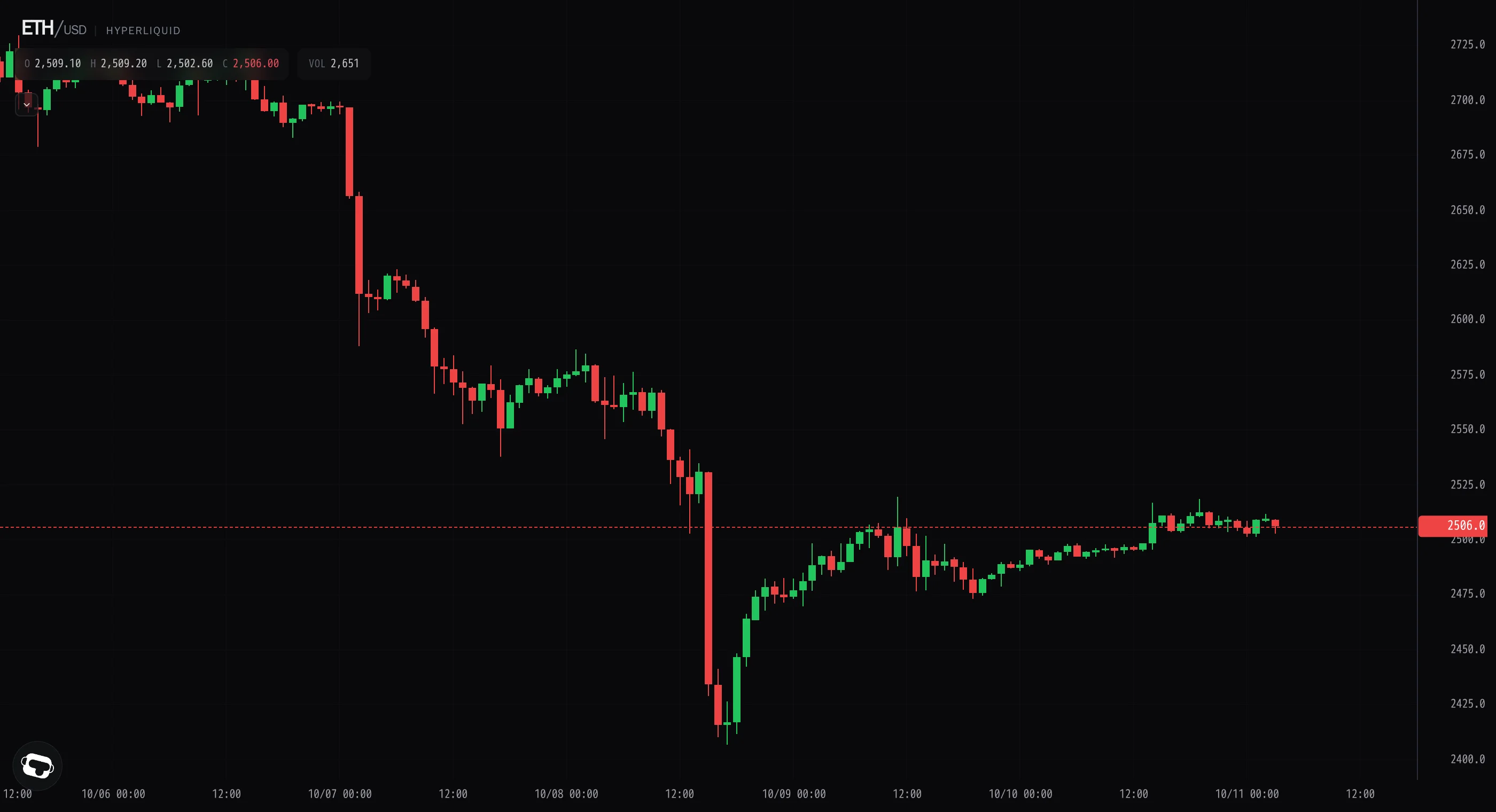
Ether's latest twelve-hour candle pushed to 2,518.49, a fresh high for the window, but closed back at 2,504.91 on roughly 70% more volume than the prior period — a churn rather than a breakout. The last six hours told the same story in miniature: a drift to 2,502, a bounce to 2,509, then a heavy 03:00 sell bar that printed negative delta and dragged price back to 2,506. Sellers are absorbing every push toward 2,518.
Venues
Connect the accounts you already trade. Keys stay read-only until you turn trading on. Limits, orders and the journal are shared across every venue on the board.
BinanceLiveBybitLiveBlofinLiveBitgetLiveHyperliquidLiveExtendedLiveOKXComing soonQuestions
Aping is a professional trading desk: one 16-column board for orderflow charts, an OEMS (order and execution management — ticket, algos, blotter, exits), and AI agents that read the same book. Journal, tape, and briefs live there too. Research, risk, and orders are not split across five tabs.
The chart engine layers heatmap (resting bid/ask over price and time), footprint (aggressor bid/ask per bar, POC, value area), TPO (session auction with VAH/VAL/POC), stats/CVD under price, and session VWAP from trades. Drawings, studies, and live OMS lines sit on the same chart. Heatmap is liquidity, not traded volume.
Internally the product still says OMS for the ledger and ticket. The landing calls it an OEMS because order management and execution algos share one book: limit/market/pro on the ticket, parent and child on the blotter, TP/SL and flatten on the position, journal synced from that ledger. It is a crypto multi-venue desk, not a buy-side FIX stack.
The Orchestrator fans out to specialists (research, execution, journal, advice, maker). They can read balances, positions, and orderflow, and start or revise algos. Mutating tools require human approval by default, with quote-age and slip checks. Scheduled missions publish short landing briefs and full markdown on /analysis. The public assistant on this site cannot trade.
No. News cards, agent analysis, and chart previews are informational only. They are not investment recommendations. You are solely responsible for any trading decision. See our Risk Disclosure.
Public briefs are generated by Aping AI scheduled missions using live market tools and chart screenshots. Data may lag the live market and can be incomplete. Always verify levels and venues before trading.
Open the console from the site header or footer. Console accounts are separate from this marketing site and may include venue connections, KYC, and product-specific terms.
We use industry-standard transport security and limit what the public landing assistant can do. Do not paste passwords, private keys, or secrets into chat. Venue API keys stay in the OMS — never in AI. See the Privacy Policy for details on logs and retention.